
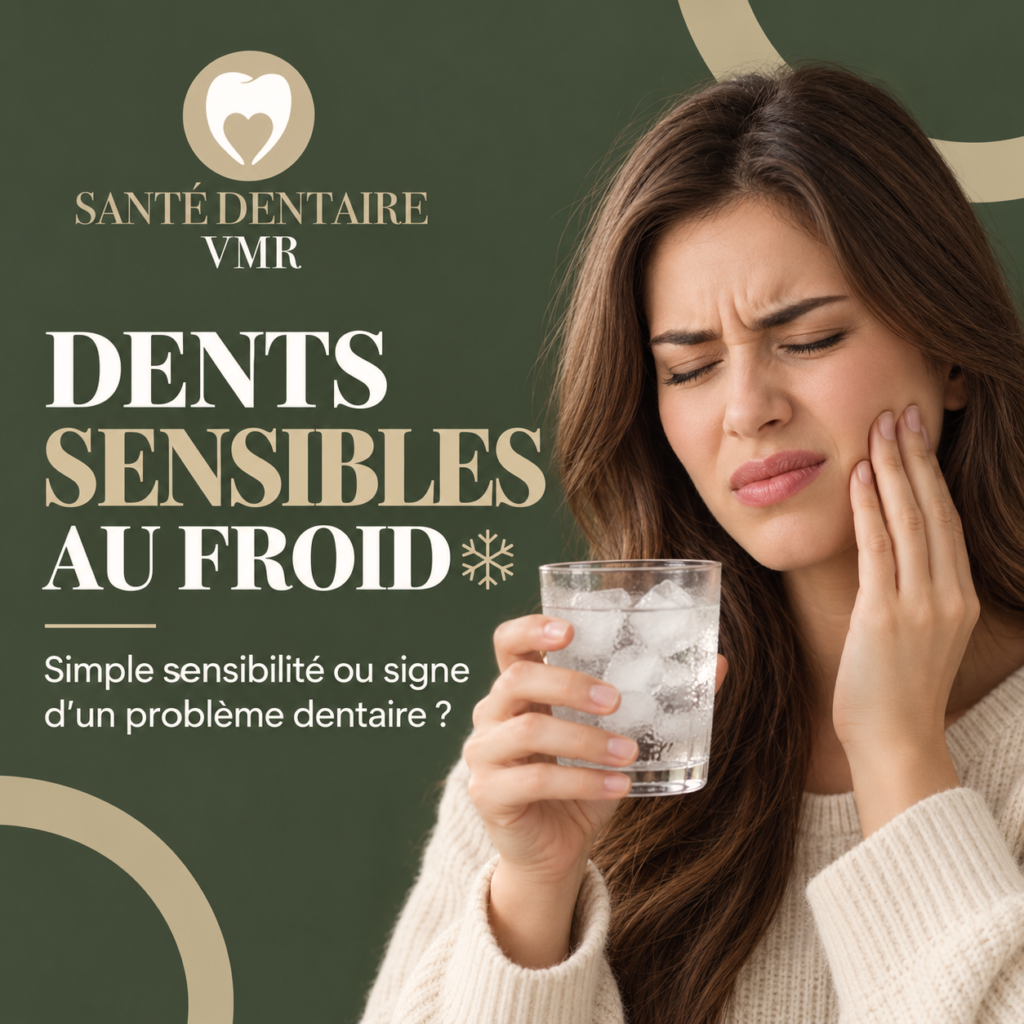
A sip of cold water or a bite of ice cream can sometimes trigger a sudden, sharp sensation in a tooth. Tooth sensitivity to cold is common, but not all sensitivity has the same cause.
When sensitivity appears suddenly, becomes more intense, or mainly affects one tooth, it may be worth paying closer attention.
Why do teeth become sensitive to cold?
Beneath the enamel is a layer called dentin. When dentin becomes more exposed, temperature changes can stimulate the inside of the tooth and cause a brief but uncomfortable sensation.
Several factors can contribute to tooth sensitivity, including:
- Gum recession;
- Worn enamel;
- Brushing too aggressively;
- A cavity;
- A cracked tooth;
- A damaged or deteriorating dental restoration.
The exact cause is not always obvious without a dental examination.
Is occasional tooth sensitivity normal?
Mild discomfort that disappears very quickly after exposure to cold may sometimes be related to dentin hypersensitivity.
What deserves more attention is a change from what is normal for you: a tooth that was previously comfortable suddenly becomes sensitive, the discomfort becomes stronger, or the sensation continues after the cold stimulus is gone.
In these situations, it is better to investigate the cause rather than simply avoiding cold foods and beverages.
Can a cavity or dental restoration cause sensitivity?
Yes. As a cavity progresses, it can reach the deeper and more sensitive layers of the tooth, leading to sensitivity.
An older filling, a cracked tooth, or another restoration that is no longer properly sealed may also cause new symptoms.
Depending on the problem identified, a dental restoration may be recommended to repair and protect the tooth.
What if the sensitivity comes from the gums?
When the gum tissue recedes, part of the tooth root can become exposed. This area is less protected by enamel and may therefore be particularly sensitive to cold temperatures.
A dental examination can help determine whether the sensitivity is coming from the tooth itself, the gums, or another cause.
When should you see a dentist?
It is a good idea to have sensitivity evaluated if it:
- Appears suddenly;
- Mainly affects one tooth;
- Becomes progressively more intense;
- Continues after exposure to cold;
- Is accompanied by pain when chewing;
- Occurs even without eating or drinking anything cold.
Severe sensitivity to cold or heat may require more immediate attention. Santé Dentaire VMR also provides emergency dental care when a dental problem requires prompt evaluation.
Understand the cause before treating the sensitivity
Toothpaste designed for sensitive teeth can help in some situations, but it does not address every possible cause of tooth sensitivity.
At Santé Dentaire VMR in Town of Mount Royal, an evaluation can help determine the source of the sensitivity and identify the most appropriate approach for your situation.
Does one of your teeth suddenly react to cold? Contact our team to have it evaluated.
0 comments on “Teeth Sensitive to Cold: Normal Sensitivity or a Sign of a Dental Problem?”