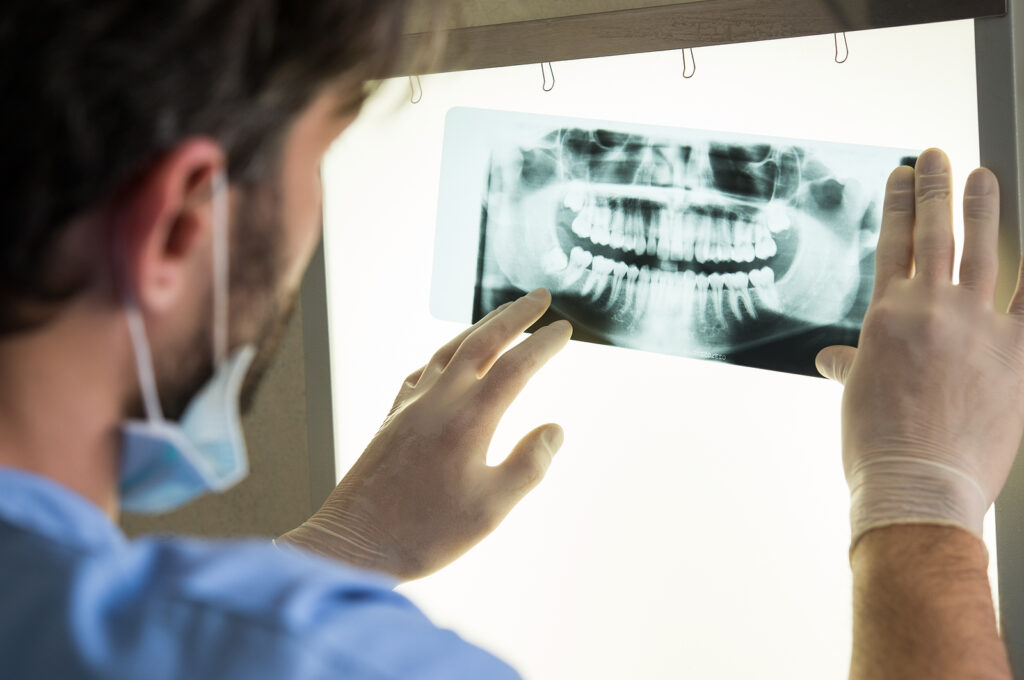
Losing a tooth may seem like an isolated problem, especially when it is not visible when you smile. However, a missing tooth can affect the balance of the mouth, chewing function, and the stability of the surrounding teeth.
Over time, the neighbouring teeth may shift toward the empty space. Chewing may also become less comfortable, and certain areas of the mouth may be exposed to increased pressure. For this reason, it is important to have a missing tooth evaluated, even when it does not cause immediate pain.
What is a dental implant?
A dental implant is a structure, usually made of titanium, that is placed in the jawbone to replace the root of a natural tooth. Once the implant has integrated with the bone, it can serve as a foundation for a crown, bridge, or another type of dental restoration.
The goal is to create a stable, functional, and aesthetic solution adapted to the patient’s mouth.
A natural-looking and long-lasting solution
A dental implant is often considered when a patient wants to replace a missing tooth with a durable solution. It can help restore chewing function, fill the space left by the missing tooth, and maintain the harmony of the smile.
The crown attached to the implant is designed to blend naturally with the surrounding teeth. Its shape, colour, and fit are carefully planned to provide a comfortable and aesthetic result.
A thorough evaluation before treatment
Not every patient is automatically a candidate for dental implants. A complete evaluation is required to assess oral health, bone quality, gum condition, and functional needs.
In some cases, other options may be discussed, such as a dental bridge or another type of restoration. The choice of treatment always depends on the patient’s condition, goals, and the dentist’s clinical assessment.
The importance of careful planning
Replacing a missing tooth requires precise planning. Digital technologies can help provide a clearer view of the teeth and supporting structures, take detailed measurements, and prepare a solution adapted to the patient’s needs.
This planning stage helps make the treatment more predictable and supports a personalized approach based on each patient’s situation.
At Santé Dentaire VMR
At Santé Dentaire VMR, dental implants, crowns, and bridges are incorporated into a comprehensive approach to restoring the smile. The team helps patients in Ville Mont-Royal evaluate the available options for replacing a missing tooth in a functional, aesthetic, and long-lasting way.
A weakened, cracked, or heavily restored tooth may sometimes require a dental crown to restore its strength, function, and natural appearance. Traditionally, this treatment required several appointments, a temporary crown, and a waiting period of a few weeks.
Thanks to the on-site fabrication technology available at Santé Dentaire VMR, it is now possible, in appropriate cases, to design and install a permanent dental crown during a single visit to the clinic in Ville Mont-Royal.
What is a dental crown used for?
A crown is a restoration that covers the visible portion of a tooth to protect it and restore its shape. It may be recommended when a tooth is:
Cracked or broken;
Weakened by extensive decay;
Significantly worn down;
Restored with a large filling;
Devitalized following root canal treatment;
Compromised from an aesthetic or functional standpoint.
Before recommending this treatment, the dentist evaluates the condition of the tooth, gums, and bite to determine whether a crown is the most appropriate solution.
A permanent crown made directly at the clinic
With the traditional method, the tooth is prepared during an initial appointment, and the measurements are then sent to an external dental laboratory. A temporary crown usually needs to be worn for several weeks before the patient returns for the placement of the permanent restoration.
At Santé Dentaire VMR, the clinic is equipped with technology that allows the necessary measurements to be taken and the crown to be fabricated directly on-site. The restoration is milled from a zirconia block selected to match the colour of the patient’s teeth.
This approach generally makes it possible to avoid:
A second trip to the clinic;
Several weeks of waiting;
Wearing a temporary crown for an extended period;
Receiving another local anesthetic at a separate appointment.
What happens during the appointment?
1. Evaluation and preparation of the tooth
The dentist begins by examining the tooth and confirming that a crown is the appropriate treatment. The tooth is then prepared to receive the restoration.
2. Digital measurements
The dimensions of the tooth and surrounding structures are recorded with precision. This information is used to design a crown that fits the shape of the patient’s teeth, the contact points between the teeth, and the bite.
3. On-site crown fabrication
The data is transmitted to the clinic’s Glidewell milling machine. The crown is then milled from a zirconia block. This step generally takes approximately 35 minutes, although the exact time may vary depending on the treatment.
4. Verification and placement
Once the crown is ready, the dentist verifies its shape, colour, contact points, and the way the upper and lower teeth meet. Any necessary adjustments can be made immediately before the crown is polished and permanently cemented into place.
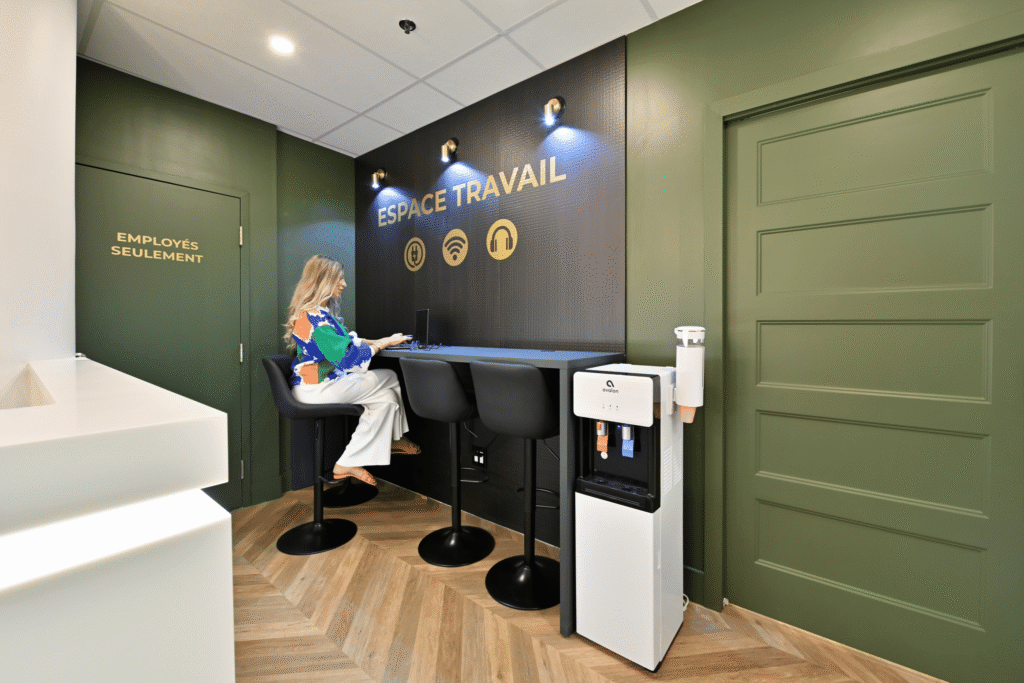
A workspace designed for your comfort while you wait
While their crown is being fabricated, patients can use a dedicated workspace located directly inside the clinic. This space allows patients to check their emails, use their laptop, or continue working comfortably during the waiting period.
The workspace is also available to other patients and visitors waiting at the clinic. With its counter, seating, and thoughtfully designed environment, it helps make the time spent at the clinic more practical and comfortable.
The workspace at Santé Dentaire VMR allows patients to work comfortably while their crown is being fabricated or while they wait at the clinic.
A restoration completed with precision
On-site fabrication allows the dentist to supervise every stage of the process. The crown’s shape, dimensions, colour, contact points, and bite can all be evaluated and adjusted during the same appointment.
Because the crown is designed and tried in immediately, any necessary modifications can be made without having to send the restoration back to an external laboratory. This approach can be especially useful when a tooth has particular requirements related to its shape, the patient’s bite, or teeth grinding.
Can every crown be completed in one visit?
A one-visit crown is suitable for many situations, but it may not be recommended for every patient. The condition and location of the tooth, the health of the gums, and the aesthetic or functional complexity of the case must all be evaluated.
A consultation with the dentist will help determine whether this solution is appropriate or whether another treatment approach would be preferable.
A dental crown in one visit in Ville Mont-Royal
On-site fabrication technology makes it possible to restore a damaged tooth more quickly while reducing the number of appointments and eliminating the need for a temporary restoration in many cases.
To find out whether a one-visit dental crown is suitable for your situation, contact the team at Santé Dentaire VMR to schedule an evaluation.